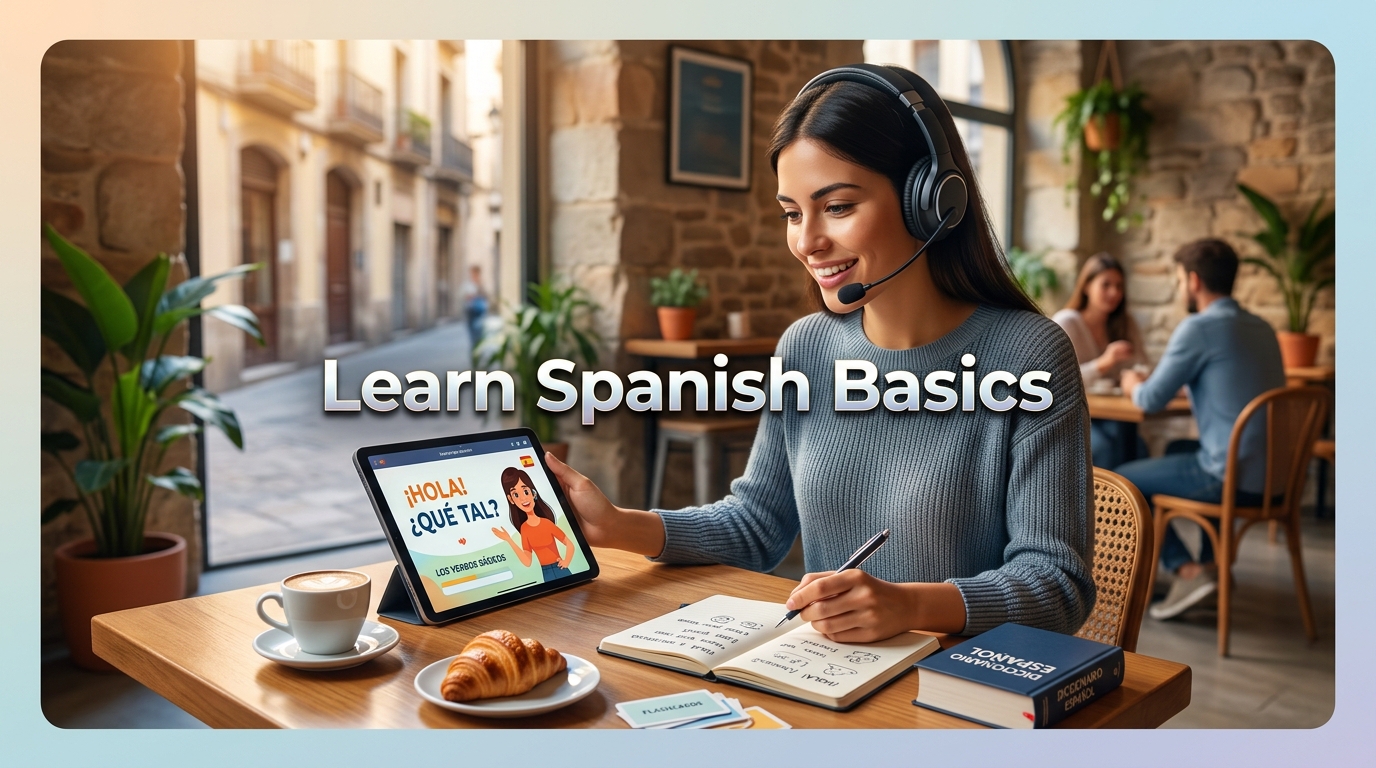
Learn Spanish Basics. The Complete Beginner Guide to Start Speaking Spanish with Confidence
Spanish is one of the most useful languages you can learn today. It is spoken by hundreds of millions of people across Europe North America Central America South America and many other parts of the world.
If your goal is to learn Spanish basics quickly and effectively the good news is that you do not need to memorize thousands of words or study complicated grammar from day one. The fastest path is building a strong foundation with practical vocabulary everyday expressions pronunciation and simple sentence patterns.
Quick Answer.The best way to learn Spanish basics is to focus on five core areas from the beginning.
- Learn the most common everyday vocabulary.
- Master Spanish pronunciation early.
- Practice simple conversations daily.
- Listen to native speakers every day.
- Use Spanish actively instead of only studying it.
Following these principles helps beginners develop real communication skills much faster than traditional memorization methods.
In this comprehensive guide you will discover exactly how beginners can start learning Spanish from scratch. You will learn what to focus on first which mistakes to avoid and how to build a practical learning routine that produces measurable progress.
Why Learning Spanish Is One of the Best Skills You Can Develop
Many people start learning Spanish because they want to travel communicate with friends improve career opportunities or simply enjoy Spanish speaking cultures. Whatever your reason may be Spanish offers benefits that extend far beyond language learning.
Spanish Is Spoken Around the World
Spanish is one of the most widely spoken languages globally. It serves as an official language in numerous countries and is used daily by hundreds of millions of native speakers.
This means that even basic Spanish skills can be useful in real situations such as travel business education customer service healthcare tourism and online communication.
Spanish Is Beginner Friendly
Compared with many other languages Spanish pronunciation follows consistent patterns. Once you understand how vowels and common letter combinations work you can pronounce a large percentage of Spanish words correctly.
This gives learners an early sense of progress which helps maintain motivation.
Spanish Opens New Opportunities
Employers increasingly value bilingual skills. Being able to communicate in Spanish may improve your opportunities in fields such as education healthcare marketing hospitality customer support and international business.
Learning Spanish is not only about language. It is about gaining access to new cultures new opportunities and new human connections.
What Beginners Should Focus on First
One of the biggest mistakes beginners make is trying to learn everything at once. Successful learners focus on the essentials first and expand gradually.
Focus on Communication Instead of Perfection
Many students delay speaking because they are afraid of making mistakes. This often slows progress significantly.
Real language learning happens through use. Native speakers generally appreciate your effort even when your Spanish is not perfect.
Learn High Frequency Vocabulary
A small number of words appear repeatedly in daily conversations. Learning these words first provides much greater value than memorizing rare vocabulary.
Examples include greetings numbers family terms common verbs and everyday expressions.
Practice Listening Early
Listening helps train your brain to recognize patterns pronunciation and sentence structures.
Even if you understand only part of what you hear regular exposure builds familiarity over time.
Common Mistakes That Slow Down Spanish Learning
Understanding what not to do can save months of frustration. Here are some of the most common beginner mistakes.
Trying to Memorize Long Vocabulary Lists
Memorization alone rarely creates speaking ability. Many learners know hundreds of words but struggle to form simple sentences.
Instead focus on learning words within useful phrases and real examples.
Ignoring Pronunciation
Pronunciation is often neglected because learners assume it will improve automatically.
While practice helps early pronunciation training creates a much stronger foundation.
Studying Without Speaking
Reading and listening are valuable but speaking is essential.
Even short daily speaking sessions can accelerate progress dramatically.
Expecting Instant Fluency
Language learning requires consistency. Progress often feels slow at first but becomes easier as your vocabulary and confidence grow.
Important Note.Fluency is not achieved in a few days or weeks. Consistent practice over months creates lasting results. Focus on steady improvement rather than quick shortcuts.
Best Ways to Learn Spanish Basics Effectively
There are many methods available today. The most effective approach combines several learning activities instead of relying on a single resource.
Use Structured Courses
A structured course provides a clear progression from beginner concepts to more advanced topics.
This prevents knowledge gaps and ensures that important fundamentals are covered systematically.
Practice Speaking Every Day
Daily speaking practice helps transform passive knowledge into active communication skills.
Even five to ten minutes of speaking can produce significant long term benefits.
Read Simple Content
Short dialogues beginner stories and simple articles help reinforce vocabulary while exposing learners to natural sentence structures.
Listen to Native Speakers
Podcasts videos interviews and conversations improve listening comprehension and pronunciation awareness.
Regular listening also helps learners develop a more natural accent over time.
Review Frequently
Forgetting is a natural part of learning. Regular review strengthens memory and improves retention.
Spaced repetition systems are especially useful for remembering vocabulary and expressions.
Comparison of Popular Beginner Learning Methods
| Method | Best For | Difficulty | Speed of Progress |
|---|---|---|---|
| Structured Online Courses | Complete Beginners | Easy | High |
| Language Apps | Daily Practice | Easy | Moderate |
| Private Tutors | Speaking Skills | Moderate | Very High |
| Spanish Podcasts | Listening Skills | Moderate | Moderate |
| Spanish Books | Reading Skills | Moderate | Moderate |
Building Your First Spanish Learning Routine
The best study plan is the one you can follow consistently. Beginners often overcomplicate their schedules and become overwhelmed.
A simple daily routine is usually more effective than long study sessions performed only occasionally.
Example Daily Schedule
- Ten minutes reviewing vocabulary.
- Ten minutes listening to Spanish audio.
- Ten minutes reading beginner material.
- Ten minutes speaking aloud.
- Five minutes reviewing mistakes and notes.
This approach requires less than one hour per day yet can generate substantial improvement over time.
Track Small Wins
Celebrate milestones such as understanding a short conversation introducing yourself successfully or completing your first Spanish lesson.
These achievements create motivation and reinforce consistent study habits.
Beginner Success Formula.
- Consistency beats intensity.
- Speaking beats memorization.
- Daily exposure beats occasional study marathons.
- Simple practical vocabulary beats advanced theory.
- Confidence grows through usage.
Now that you understand why Spanish is valuable what beginners should focus on and which learning methods work best the next step is building a practical foundation with essential vocabulary pronunciation and core language patterns.
In the next section we will explore the most important Spanish words phrases pronunciation rules and beginner communication skills that every learner should master first.
Essential Spanish Vocabulary Every Beginner Should Learn First
Vocabulary is the building block of communication. Many beginners make the mistake of learning random words that rarely appear in daily conversations. A more effective strategy is learning high frequency vocabulary that you can immediately use in real situations.
The goal is not to memorize thousands of words. Instead focus on the vocabulary that appears most often in greetings introductions questions directions shopping travel and everyday conversations.
Essential Greetings
Greetings are among the first expressions every learner should master. They help create positive interactions and are used constantly throughout the day.
| Spanish | English |
|---|---|
| Hola | Hello |
| Buenos días | Good morning |
| Buenas tardes | Good afternoon |
| Buenas noches | Good evening |
| Adiós | Goodbye |
| Hasta luego | See you later |
These simple expressions can immediately make your conversations sound more natural and confident.
Introducing Yourself
One of the first practical skills you should develop is introducing yourself.
| Spanish | English |
|---|---|
| Me llamo | My name is |
| Mucho gusto | Nice to meet you |
| Soy de | I am from |
| ¿Cómo se llama? | What is your name? |
With only a few expressions you can already begin basic conversations with Spanish speakers.
Essential Survival Expressions
These phrases become extremely useful when communicating as a beginner.
| Spanish | English |
|---|---|
| No entiendo | I do not understand |
| ¿Cómo se dice? | How do you say? |
| ¿Qué significa? | What does it mean? |
| Repita por favor | Please repeat |
| Perdón | Sorry |
| Habla inglés | Do you speak English? |
These expressions allow you to continue conversations even when your Spanish vocabulary is still limited.
Spanish Pronunciation Basics
Spanish pronunciation is often easier than learners expect. Unlike English many Spanish letters produce consistent sounds.
Learning pronunciation early prevents bad habits and makes communication much easier.
The Five Spanish Vowels
Spanish pronunciation relies heavily on five vowel sounds. Each vowel is pronounced almost the same way every time it appears.
| Letter | Approximate Sound | Example |
|---|---|---|
| A | ah | Amigo |
| E | eh | Elefante |
| I | ee | Sí |
| O | oh | Ocho |
| U | oo | Uno |
Mastering these five sounds dramatically improves pronunciation accuracy.
Important Pronunciation Rules
- The letter H is usually silent.
- The letter J sounds similar to a strong English H.
- The letter Ñ sounds similar to the ny sound in canyon.
- The double LL often sounds like Y in many regions.
- Spanish vowels should be pronounced clearly and consistently.
Good pronunciation does not require a perfect accent. The goal is clear communication and understanding.
The Most Important Spanish Question Words
Questions drive conversations. Learning a small group of question words allows you to gather information and keep discussions moving.
| Spanish | English |
|---|---|
| ¿Cómo? | How |
| ¿Cuándo? | When |
| ¿Cuánto? | How much |
| ¿Cuál? | Which |
| ¿Quién? | Who |
| ¿Dónde? | Where |
| ¿Por qué? | Why |
By combining these words with simple vocabulary you can create dozens of useful questions.
Examples
- ¿Cómo está?
- ¿Dónde vive?
- ¿Cuándo llega?
- ¿Por qué estudia español?
Numbers Every Beginner Should Know
Numbers appear constantly in daily life. You need them for prices dates addresses schedules appointments and travel.
Numbers One Through Ten
| Spanish | English |
|---|---|
| Uno | One |
| Dos | Two |
| Tres | Three |
| Cuatro | Four |
| Cinco | Five |
| Seis | Six |
| Siete | Seven |
| Ocho | Eight |
| Nueve | Nine |
| Diez | Ten |
Once you know these numbers it becomes much easier to learn larger numbers through patterns.
Core Grammar Concepts Beginners Should Understand
Many learners fear grammar because they assume it is difficult. In reality beginners only need a few basic concepts to start communicating effectively.
Subject Pronouns
| Spanish | English |
|---|---|
| Yo | I |
| Tú | You |
| Él | He |
| Ella | She |
| Nosotros | We |
| Ellos | They |
You do not need to memorize every grammar rule immediately. Focus on understanding how basic sentences are structured.
Simple Sentence Pattern
Many Spanish sentences follow a straightforward pattern.
Subject + Verb + Information
Examples
- Yo estudio español.
- Ella vive en Madrid.
- Nosotros trabajamos juntos.
Learning a few sentence patterns gives you a framework for creating hundreds of new sentences.
Useful Beginner Verbs
| Spanish Verb | English Meaning |
|---|---|
| Ser | To be |
| Estar | To be |
| Tener | To have |
| Hablar | To speak |
| Comer | To eat |
| Vivir | To live |
| Estudiar | To study |
Beginner Tip.Focus on using verbs in simple practical sentences before diving into advanced conjugation rules.
How to Improve Speaking Skills Faster
Speaking is often the most intimidating part of learning Spanish. However it is also one of the most important skills.
Talk to Yourself
Describe your surroundings daily using simple Spanish words and phrases.
This technique helps build confidence without pressure.
Read Aloud
Reading aloud improves pronunciation rhythm and fluency simultaneously.
Even five minutes per day can produce noticeable improvement.
Use Simple Conversations
Practice common situations such as introductions ordering food asking directions and discussing hobbies.
Real communication builds skills much faster than passive study.
How to Improve Listening Skills
Listening is a skill that develops gradually through consistent exposure.
Start with Slow Audio
Choose beginner friendly materials that speak clearly and at a slower pace.
Listen Repeatedly
Do not worry if you miss words during the first listening session.
Repeated exposure helps your brain recognize sounds and patterns naturally.
Focus on Understanding the Main Idea
Beginners often try to understand every word. Instead focus on understanding the overall message first.
Comprehension improves naturally as vocabulary grows.
The Four Skill Formula.
- Read every day.
- Listen every day.
- Speak every day.
- Review every day.
Learners who consistently practice all four skills tend to progress much faster than those who focus on only one area.
At this stage you have learned the essential vocabulary pronunciation fundamentals key question words beginner grammar concepts and communication strategies that form the foundation of Spanish learning.
The next section will focus on creating an effective 30 day study plan selecting the best learning resources tracking progress avoiding long term learning plateaus and answering the most common questions beginners ask when starting their Spanish journey.
Your 30 Day Learn Spanish Basics Study Plan
One of the biggest reasons learners fail is the lack of a clear roadmap. They jump between apps videos books and random lessons without a structured plan.
The following 30 day study plan is designed specifically for beginners who want to build a strong foundation while developing real communication skills.
Week 1. Build Your Foundation
The first week should focus on becoming comfortable with the sounds and structure of Spanish.
- Learn greetings and introductions.
- Practice Spanish vowel sounds daily.
- Learn numbers from one to one hundred.
- Memorize essential survival phrases.
- Listen to beginner Spanish audio for ten minutes daily.
At the end of week one you should be able to introduce yourself and understand basic greetings.
Week 2. Build Core Vocabulary
The second week focuses on expanding practical vocabulary.
- Learn family vocabulary.
- Learn food and drink vocabulary.
- Learn common daily activities.
- Practice simple questions and answers.
- Read short beginner dialogues.
By the end of this week you should be able to describe yourself and discuss simple daily topics.
Week 3. Start Creating Conversations
This stage focuses on active communication.
- Practice speaking aloud every day.
- Use common beginner verbs.
- Create short sentences about your life.
- Listen to slow Spanish conversations.
- Record yourself speaking.
The goal is confidence rather than perfection.
Week 4. Strengthen Real World Skills
The final week combines everything learned during the month.
- Practice mini conversations.
- Review all vocabulary.
- Watch beginner Spanish videos.
- Read simple Spanish stories.
- Identify weak areas and improve them.
After thirty days most learners can understand simple conversations and communicate at a basic level.
30 Day Goal.Your objective is not fluency. Your objective is building enough confidence and knowledge to continue learning successfully.
Best Resources to Learn Spanish Basics
Choosing the right resources can significantly improve your learning experience.
Structured Spanish Courses
A well organized course provides clear progression and helps avoid confusion.
Look for courses that emphasize listening speaking vocabulary and practical communication.
Spanish Podcasts
Podcasts are excellent for improving listening comprehension.
Beginner friendly podcasts allow learners to hear natural Spanish while gradually expanding vocabulary.
YouTube Lessons
Video lessons provide visual explanations and pronunciation demonstrations.
Many learners find video content easier to follow than textbooks alone.
Reading Material
Short stories graded readers and beginner articles help improve vocabulary and sentence recognition.
Language Exchange Partners
Talking with native speakers provides practical experience and builds confidence much faster than studying alone.
How to Stay Motivated While Learning Spanish
Motivation often decreases after the initial excitement fades. Successful learners rely on habits rather than motivation alone.
Set Small Achievable Goals
Large goals can feel overwhelming.
Instead aim for milestones such as learning twenty new words completing five lessons or having a short conversation.
Track Your Progress
Keep a notebook or digital journal where you record new vocabulary completed lessons and personal achievements.
Seeing progress helps maintain momentum.
Use Spanish Daily
Language skills grow through regular exposure.
Even brief daily practice is more effective than occasional long study sessions.
Accept Mistakes
Mistakes are a natural and necessary part of language learning.
Every error provides an opportunity to improve.
The learners who succeed are not the ones who never make mistakes. They are the ones who continue practicing despite mistakes.
Signs You Are Making Progress
Many learners underestimate their improvement because progress often happens gradually.
Here are positive signs that your Spanish skills are developing.
- You recognize more words while listening.
- You need fewer translations.
- You can create simple sentences independently.
- You understand basic conversations.
- You feel more comfortable speaking.
- You can read simple texts with less effort.
These small victories accumulate into significant language growth over time.
Frequently Asked Questions
How long does it take to learn Spanish basics?
Most learners can develop basic conversational skills within a few months of consistent study. Progress depends on practice frequency learning methods and previous language experience.
Can I learn Spanish without living in a Spanish speaking country?
Yes. Modern learners have access to online courses videos podcasts language exchange partners and digital resources that make effective learning possible from anywhere.
Should I focus on grammar first?
No. Beginners benefit more from learning practical vocabulary pronunciation and communication skills before studying advanced grammar concepts.
How much should I study each day?
Thirty to sixty minutes of focused daily study is often enough to create steady progress.
Is Spanish difficult for English speakers?
Spanish is generally considered one of the most accessible languages for English speakers due to its pronunciation consistency and shared vocabulary roots.
What is the fastest way to improve speaking?
Regular speaking practice combined with listening and vocabulary review produces the fastest improvement.
Key Takeaways
Learning Spanish basics does not require complicated strategies or years of study before speaking.
The most successful learners focus on practical communication from the beginning.
- Master essential vocabulary first.
- Develop strong pronunciation habits.
- Practice speaking every day.
- Listen to Spanish regularly.
- Follow a structured learning plan.
- Stay consistent over time.
- Accept mistakes as part of the process.
These principles create a strong foundation that supports long term fluency and confidence.
Final Thoughts
Spanish is one of the most rewarding languages you can learn. It opens doors to new cultures friendships travel opportunities and professional advantages.
The journey begins with mastering the basics. Focus on consistent daily practice rather than perfection. Small improvements made every day eventually lead to remarkable results.
Whether your goal is travel career growth personal development or communication with Spanish speakers the skills you build today will continue providing value for years to come.
Start Today.Do not wait until you feel ready. Learn a few new words practice a simple conversation and take the first step. Consistent action is what transforms beginners into confident Spanish speakers.
Ready to Accelerate Your Spanish Learning Journey
If you want a structured step by step approach to learning Spanish basics through practical communication listening exercises vocabulary building and real world speaking practice explore high quality Spanish learning programs and begin building your fluency today.
The best time to start learning Spanish was yesterday. The second best time is now.
Steps tested on the current version at the time of writing. If a screen or setting has moved, email us and we update the tutorial. Results depend on your offer and your market; nothing here is a promise of income.